

How To Make Your Modular Kitchen a Functional Kitchen?
Updated: Mar 4

Your kitchen may look stunning in photos and make your guests go wow, with glossy cabinets, marble counters, and perfect lighting, but if it doesn’t work for you, it will slowly start to frustrate you.
A truly functional kitchen makes your daily life easier. It reduces unnecessary movement, keeps spices and cookware within reach, and supports your cooking style, whether you’re making quick breakfasts or hosting large family dinners.
If your kitchen sees heavy cooking and heavy traffic (which most Indian kitchens do), functionality isn’t just add-ons; it’s everything.
In this blog, let’s break down what makes a kitchen truly functional and how you can design one that works beautifully for you.
Table of Contents:
What Is a Functional Kitchen?

A functional kitchen is designed around knowing your movement, storage style, durability, and comfort.
It allows you to move smoothly between tasks, access tools easily, and maintain cleanliness with minimal effort.
Many people think functionality means having a large kitchen. But it’s not about size. Even a compact kitchen can be incredibly efficient when designed correctly.
The Golden Work Triangle And Kitchen Layout
The Golden Work Triangle connects the three most important zones in your kitchen:
Sink
Stove
Refrigerator
The idea is simple: reduce unnecessary walking.
The distance between these three points should be short and allow you to move smoothly without any obstruction.
But the triangle method is a little outdated because today’s modern household has numerous storage compartments like tandem drawers, wicker baskets, etc, and the living style has also changed.
Yet, you can use this method to choose the right kitchen layout for you.
The most famous kitchen layouts are L-shaped, G-shaped, U-shaped, parallel kitchen, and straight wall kitchen.
For example, U-shaped kitchens provide maximum storage and counter space. Parallel kitchens work well in compact homes by separating work zones efficiently. Straight-line kitchens are perfect for studio apartments or smaller spaces.
When planned well, you don’t have to cross the entire kitchen just to grab vegetables from the fridge, and your cooking becomes easier and more comfortable.

Countertop & Material Selection
Always choose your kitchen materials based on your lifestyle requirements.
For example, if your kitchen sees heavy cooking and heavy traffic, white tiles might not be ideal, as they stain easily.
If you are someone who opens cabinet doors more than 20 times daily, avoid delicate finishes and use strong hardware systems.
Design should support your usage, not fight against it.

Smart Storage System And Accessories
Clutter is the enemy of functionality. When everything has a designated place, cooking becomes faster and calmer.
Here’s how to make your storage smarter:
1. Use the Space Above the Fridge
That awkward space above the refrigerator often goes unused. Instead of leaving it wasted, install a closed cabinet for rarely used items.
But avoid open shelves here because dust and grease build up quickly.
This space is perfect for “not-daily” items.

2. Pull-Out Dustbin
Visible trash bins may look unattractive and might disrupt your workflow.
Instead, install pull-out bins inside lower cabinets under the sink.
This keeps your kitchen cleaner and more hygienic, especially important in high-use homes.
Try to separate waste into dry and wet waste. It will help you with recycling and composting.
This keeps the kitchen cleaner and more hygienic, especially important in high-use homes.

3. Appliance Storage That Makes Sense
Small appliances like the Instant Pot, stand mixer, blender, and Food processor are used frequently.
For this, the rolling shutter storage is the best option. Or you can also use pull-out shelves inside cabinets.
It leaves the countertop clean and makes the appliances more accessible.

4. Conquer the Corner Cabinets and Vegetable Storage
Corner cabinets are notoriously difficult to use. You have to bend and fight against it. But modern solutions eliminate this frustration. Smart accessories like:
Lazy Susan (rotating shelves)
Magic corner mechanisms
These options use deep corner spaces efficiently without making you crawl inside the cabinet.
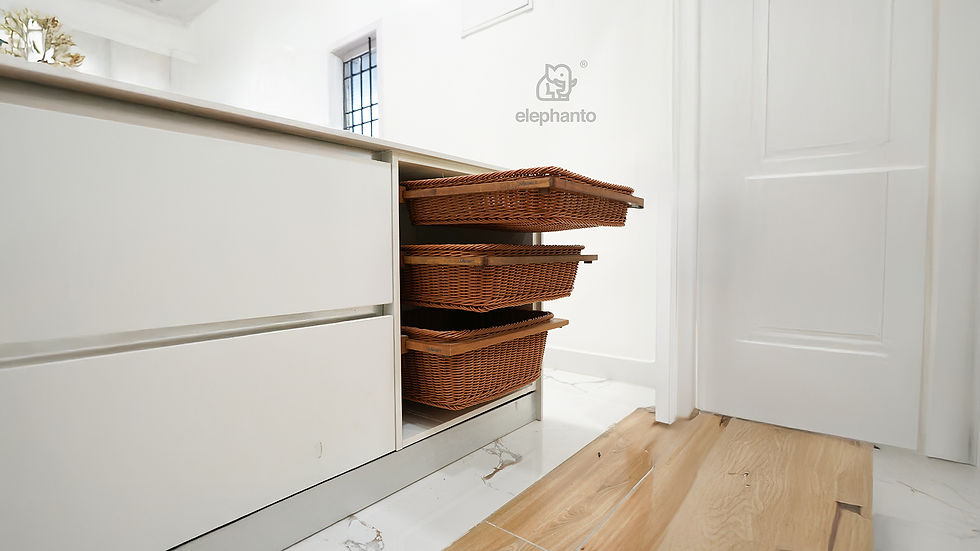
A wicker basket is best for storing vegetables and fruits.
5. Soft-Close Drawers & Cabinets
Soft-close systems seem like a luxury, but they are useful because they prevent unwanted slamming and increase hardware lifespan.
It might seem like a small detail, but it really reduces your maintenance costs.
If your cabinet doors are opened more than 20 times per day, invest in durable hinges and materials that withstand frequent use.
Lighting That Supports Function
A beautiful kitchen without proper lighting becomes inconvenient even more quickly.
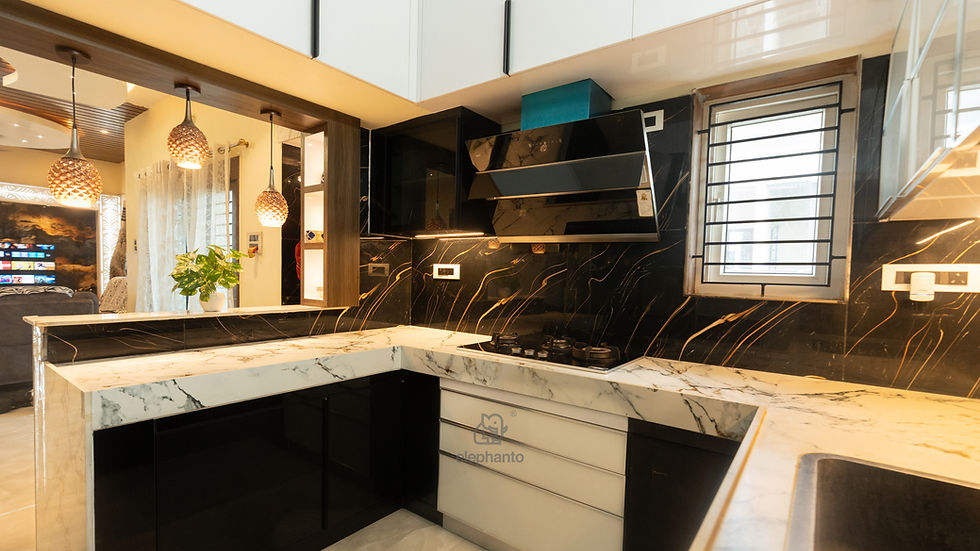
To tackle that, you need layered lighting:
Task Lighting – Under-cabinet lights for chopping and cooking.
Ambient Lighting – Ceiling lights for overall brightness.
Accent Lighting – Optional, but enhances mood and depth.
Poor lighting creates shadows over countertops, making prep work, chopping, and cooking difficult.
But functional lighting supports safety and efficiency.
Common Mistakes That Kill Functionality
Even expensive kitchens can fail if functionality is ignored. Here are common mistakes to avoid:
Prioritising Looks Over Workflow - A beautiful kitchen that disrupts movement becomes frustrating fast.
Ignoring Storage Planning - Not planning for appliances, bulk groceries, and utensils leads to clutter.
Poor Ventilation - Cooking-heavy homes need strong chimneys and airflow systems.
Insufficient Counter Space - You can never have too much prep space.
Choosing Trendy but Impractical Materials - Some finishes look stunning in the showrooms, but wear quickly in real life.
Function First, Always
Your kitchen should support your lifestyle, not the other way around.
Before planning to design your modular kitchen, ask yourself:
Do I cook daily or occasionally?
Do multiple people use the kitchen at once?
Do I need heavy storage?
Do I host often?
Design around your answers.
A functional kitchen doesn’t just look premium, it feels effortless to use.
Final Thoughts
A kitchen is more than cabinets and countertops.
It’s where the food is prepared with love, Morning tea rituals, and Late-night conversations happen. Most importantly, the kitchen is what nourishes the whole family.
So, we need to design it efficiently. When designed correctly, it reduces stress, saves time, and makes daily life smoother.
Because the true luxury of a kitchen is not how it looks,
It’s how well it works. That’s what Elephanto is known for.
General Interior Design FAQ
1. How to make my kitchen more functional?
You can make your modular kitchen more functional by choosing the right materials, planning smart storage, and ensuring proper lighting and ventilation.
2. How can I increase storage without increasing space?
Use vertical storage, tall units, corner pull-outs, drawer organizers, and overhead cabinets up to ceiling height.
3. How can lighting improve functionality?
Add task lighting under cabinets and bright lighting above prep areas to avoid shadows while cooking.
4. How do I future-proof my kitchen?
Invest in quality hardware, soft-close systems, good ventilation, and flexible storage solutions.
5. Is a tall pantry unit necessary?
If space allows, yes. It improves organisation and keeps dry items easily accessible.


Comments