

9 Kitchen Wall Tile Ideas To Change Your Modular Kitchen Look

We've seen this mistake happen in many homes.
They choose the most expensive materials, laminates, and finishes. But the wall tiles? It will be just the old-style fruits and vegetables printed on wall tiles.
If your wall tiles don't match your overall kitchen design, even a premium modular kitchen can end up looking outdated and boring.
Because your wall tiles do more than just protect your kitchen against splashes and stains. They set the tone for your entire kitchen. So, choosing the right kitchen wall tiles should be the first thing on your checklist.
But oh wait! How can you select the right wall tiles with so many options available? In this blog, we've curated 9 stunning kitchen wall tile ideas that never go wrong.
Table of Contents:
1. Kitkat Tiles

We know you have seen these wall tiles all over your Instagram and Pinterest feeds.
These viral wall tiles got their name from their resemblance to the segmented chocolate bar.
KitKat tiles are slim, rectangular pieces typically arranged in vertical or horizontal strips with visible grout lines, creating a rhythmic, linear texture.
If you love contemporary or minimalist kitchens, KitKat tiles are your go-to choice. They add subtle visual interest without competing with other design elements.
KitKat tiles are especially popular in glossy finishes for a clean, reflective look, or in matte stone-effect finishes for a softer, more organic feel.
2. Aztec Tiles

If KitKat tiles give a soft, classy look, then Aztec tiles give a rich and bold look.
They are inspired by the intricate patterns of ancient Aztec art.
Aztec tiles have different patterns, like these tile angular motifs, stepped pyramids, and sun symbols.
As the patterns are so visually striking, it's best to pair them with simple cabinetry and neutral countertops so the tile can take center stage without overwhelming your kitchen.
3. Star and Cross Tiles

If you've ever scrolled one too many Pinterest boards labeled "dream kitchen," you've probably fallen for star and cross tiles without even knowing their name.
They're one of those patterns that just works, an eight-pointed star nestled against a cross shape, repeating over and over until your eye kind of loses track of where one tile ends and the next begins. That's the whole point. It's mesmerizing by design.
The look traces back to Moorish and Mediterranean tilework, and you'll typically see it recreated today in encaustic or cement tile styles, the kind with that soft, slightly imperfect, hand-painted quality. Think dusty blues, warm terracotta, creamy whites, nothing glossy or mass-produced feeling.
4. Terracotta Tiles

There's something about terracotta that just feels warm, and not only because of the color.
Made from natural fired clay, these tiles carry that classic earthy, reddish-brown hue, along with a slightly rustic, handmade look.
No two tiles come out quite the same, which is really part of the charm. It's imperfect in the best way.
Terracotta has long been a flooring favorite, but lately it's been climbing the walls, quite literally.
It's the kind of material that instantly makes a space feel a little sun-baked, a little lived-in, in a good way.
Pair it with wood-finish cabinetry, brass hardware, and a few trailing plants, and you've basically nailed that cozy, timeless, grounded look everyone seems to be chasing right now.
5. Marble Tiles

If you want a kitchen that reads "elegant" without even trying, marble is pretty much the shortcut. There's a reason it's been the go-to for centuries: that natural veining, the subtle shifts in color, the soft sheen that catches the light just right. It doesn't shout for attention; it just quietly elevates everything around it.
Not all marble is created equal, though. Carrara is the classic: white background, soft grey veining, understated and clean. Calacatta turns up the drama with bolder, more sweeping veins that basically become the focal point of the room. And then there's Emperador, with its rich, warm brown tones, for something a little moodier and more grounded.
As for where to use it, honestly, marble is flexible.
Go big with a full backsplash if you want serious impact, or keep it more restrained as an accent behind open shelving. Either way, it plays well with almost any style, minimalist or traditional, without feeling out of place.
6. Moroccan Geometric Tiles
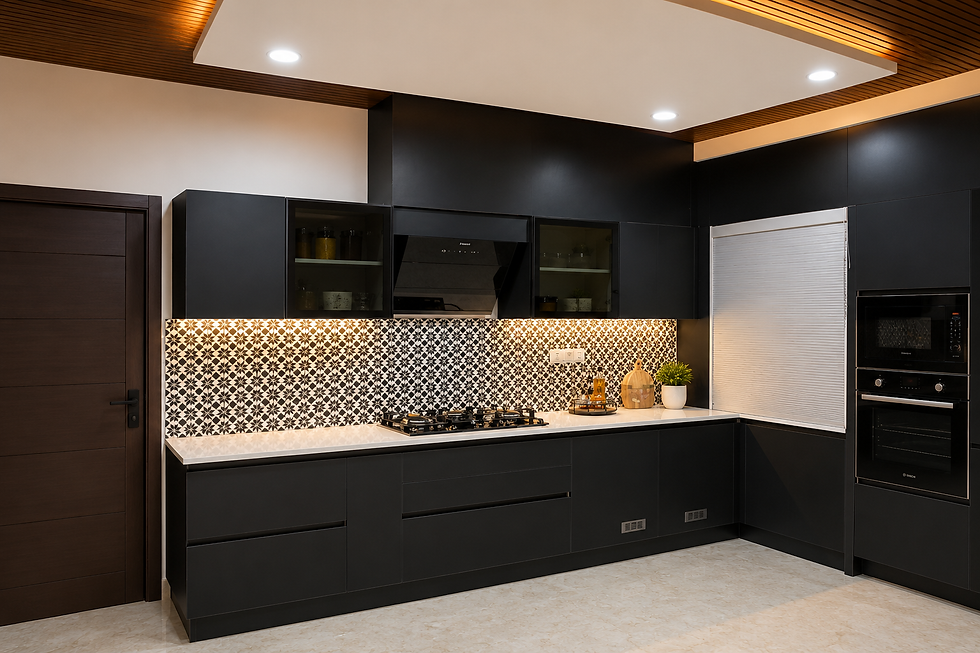
Some tiles are content to just fill space. Moroccan geometric tiles are not those tiles. They show up with intricate, symmetrical patterns, interlocking hexagons, diamonds, and sweeping arabesque motifs.
It's the kind of design that carries centuries of North African craftsmanship in every tile, and you can feel that history the moment you look at it.
If you want your kitchen to have a little personality and a little global storytelling, this is how you do it. These tiles absolutely shine as a focal-point backsplash, and they're especially striking behind a cooktop or sink, where you're standing close enough to actually take in all that detail.
That said, there's a balance to strike here. Because the pattern is so rich, our designers usually suggest keeping it contained, one accent wall, one focal area, rather than letting it sprawl across the whole kitchen.
The rest of the space can stay simple, even a little plain. That contrast is actually what makes the Moroccan tile pop instead of overwhelming the room.
7. 3D Wave Tiles

Flat tiles are fine. But if you want your kitchen wall to actually do something- catch the light, cast little shadows, feel almost alive as the sun moves through the room- then 3D wave tiles are where it's at.
That rippling, undulating surface creates a textural effect flat tile just can't fake. It's subtle, it's sculptural, and it photographs beautifully.
You'll typically find these in white, grey, or soft pastel finishes, which keeps the focus on the shape rather than the color; the movement and depth do all the talking.
That's exactly why they've become such a hit in contemporary and coastal-style kitchens, where that sense of quiet motion fits right in.
The one thing to keep in mind: that same texture that makes them so interesting also makes them a bit more work to clean. Grease splatter loves to hide in those little ridges. So it's worth keeping 3D wave tiles a step back from your heaviest cooking zones, or being ready to give them a bit more scrubbing love than you would a flat tile.
8. Herringbone Wall Tiles
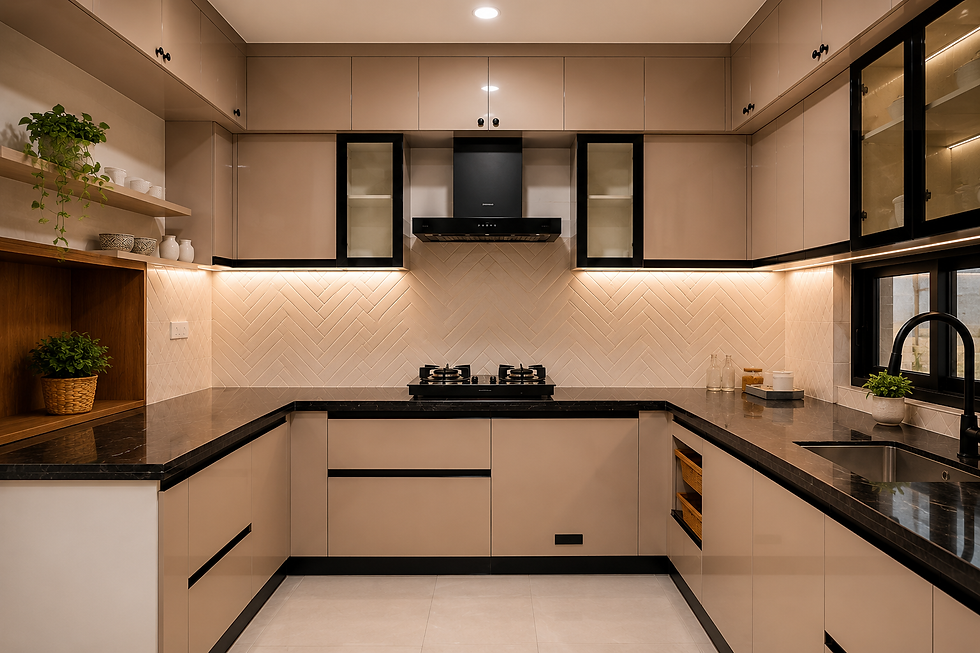
Here's the thing about herringbone: it's not even a tile, technically. It's a layout.
You can create it with subway tile, natural stone, terracotta, basically whatever material you're already drawn to. What makes it herringbone is the arrangement: rectangular tiles set at 90-degree angles to each other, forming that signature zigzag that somehow manages to look both busy and completely put-together at the same time.
What's nice about herringbone is that it does the heavy lifting without needing bold color or an elaborate motif. That's part of why it's so easy to drop into almost any kitchen style, traditional or contemporary, without it fighting for attention against everything else in the room.
Backsplashes are really where herringbone gets to shine. Those diagonal lines have a neat trick up their sleeves; they can make your eye read a small kitchen as larger and more dynamic than it actually is. So if you've got a compact space that could use a little visual lift, herringbone is worth a serious look.
9. Jaipur Blue Pottery Tiles

Unlike Athangudi (which is really a flooring tile at heart), Jaipur Blue Pottery tiles were made for walls from the start. Originating in Rajasthan, this craft uses a distinctive quartz-and-glass paste rather than clay, giving the tiles a smooth, slightly glossy, almost ceramic-like finish that's naturally suited to vertical surfaces.
True to the name, cobalt and turquoise blues dominate the palette, though you'll also find deep greens and yellows worked in, usually in intricate floral, paisley, or bird motifs painted entirely by hand.
In a kitchen, these tiles make a stunning backsplash behind a stove or sink, especially in homes with a Rajasthani, colonial, or maximalist Indian aesthetic. They pair naturally with white or cream cabinetry, brass hardware, and warm wood accents, letting the blue tones really sing against a neutral backdrop. Because the patterns are intricate, most designers suggest keeping them to a single feature wall or splashback area rather than an entire kitchen.
But keep in mind, blue pottery is fired at a relatively low temperature, making it a bit more delicate than standard ceramic tile, so it's best kept away from high-impact areas and given a light sealant for extra durability in a kitchen environment.
Final takeaway: So, which wall tile idea are you going to try?
With this many gorgeous options on the table, the real question isn't which tile is "best"; it's which mood you're actually going for. Want your kitchen to make a statement the second someone walks in? Bold, patterned tiles like Aztec, star and cross, or Moroccan geometric designs are your best friends.
At the end of the day, though, your kitchen wall tiles are a long-term commitment, not an impulse buy.
So before you settle on anything, order a few samples, take them home, and actually look at them in your own lighting; tiles have a funny way of looking completely different under a showroom spotlight versus your kitchen window.
Hold them up against your cabinetry, your countertops, your color palette. Give yourself the time to get it right, because this is one decision you'll be living with, and looking at, for years to come.
Frequently Asked Questions
1. What's the best tile for a kitchen backsplash?
Honestly, there's no single "best"; it depends on the vibe you're going for. But if you want to play it safe, go for marble.
2. Can I mix two different tile styles in one kitchen?
Absolutely, and it's a popular approach. Pair a bold patterned tile (like Moroccan or star and cross) as a focal-point backsplash behind the stove, while keeping the rest of the kitchen in a simpler tile or plain paint.
3. Do textured tiles like 3D wave or kitkat tiles need special cleaning?
A little, yes, because their raised surface can trap grease. So, you need to clean them regularly.
4. Should kitchen wall tiles be glossy or matte?
Both work well, but compared to glossy, matte is a little harder to maintain.
5. How can I make a small kitchen look bigger with wall tiles?
It’s easier than you think. Choose a light color like cream or beige, and go for a glossy finish.


Comments